Best Time to Visit the Ice Caves: Month-by-Month Guide
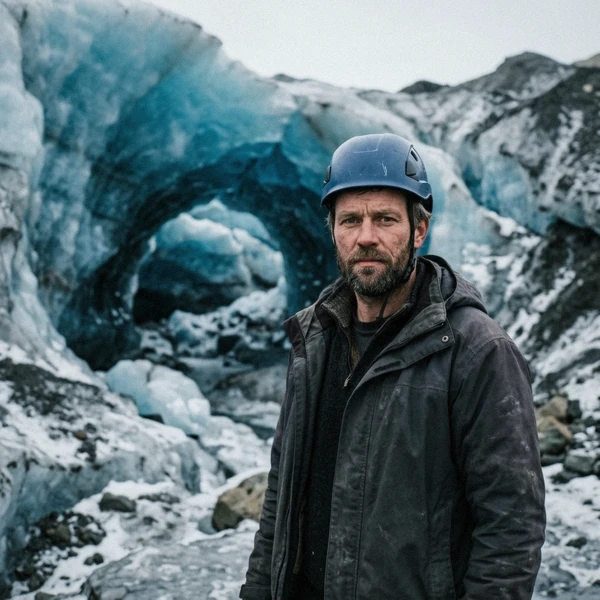
The best time to visit ice caves in Iceland is January and February, when the ice has had two months of cold to set the roofs and every chamber is running. November and March are the honest runners-up, one with fresh caves and short light, the other with eleven hours of daylight and a rising chance a thaw has already taken the best feature. April through October is the window to rule out: the meltwater is back in the channels and no natural cave on Vatnajökull is enterable at any price. Written in July 2026, from eleven autumns of scouting these features.
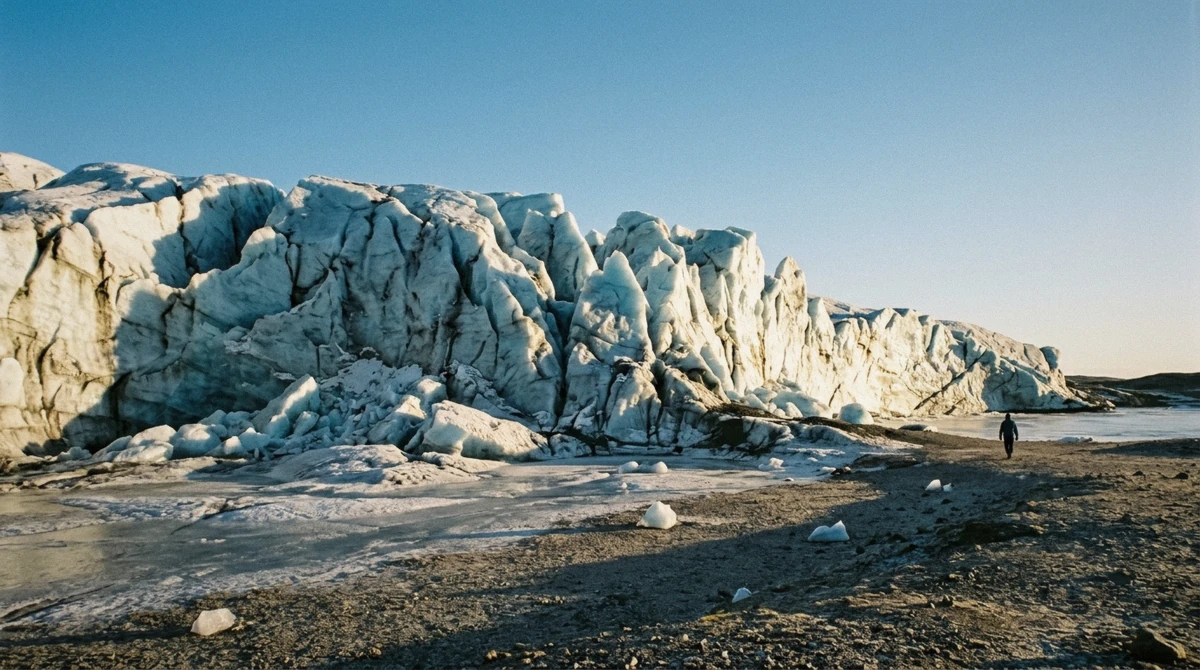
Quick answer
January and February are the best months for a Vatnajökull ice cave tour: the roofs are locked in by cold, every operator is running, and February brings daylight back to eight hours. The full season runs November through March. From April to October there is no natural cave to enter on this glacier, and glacier hikes from $97 are what replaces them.
Key takeaways
- Best window: January and February, for the most stable ice and the fullest chambers
- Runner-up: November and March, cheaper to get a slot but with newer or already-thinning caves
- Avoid for caves: April to October, when meltwater has reopened the channels and nothing is enterable
- The thing most people get wrong: cold does not build the caves, the absence of running water does, so a mild wet January is worse for your booking than a hard frost
- Best time of day: the first departure, which reaches the feature before other groups and before afternoon wind
- Tightest weeks to book: the Christmas fortnight and February half-term, both gone weeks ahead
Seasons at a Glance
Every month, and what is actually open
Read the verdict column as advice for a cave trip specifically. A month that is poor for caves can be an excellent month on this coast for everything else, and the hikes column shows what still runs. Live Vatnajökull ice cave departures are listed on the homepage.
| Month | Ice caves | Glacier hikes | Crowds | Verdict |
|---|---|---|---|---|
| January | Open, most stable | Running | Moderate | Best overall |
| February | Open, stable | Running | High (half-term) | Best light plus stable ice |
| March | Open, thinning late | Running | Moderate | Good, with rising risk |
| April | Closed | Running | Low | Hikes only |
| May | Closed | Running | Low | Hikes only, long light |
| June | Closed | Running | High | Skip for caves, peak daylight |
| July | Closed, meltwater peak | Running | Peak | Worst month for caves |
| August | Closed | Running | Peak | Skip for caves |
| September | Closed, scouting starts | Running | Moderate | Too early, caves unproven |
| October | Closed, dates go on sale | Running | Low | Reserve early, travel later |
| November | Opening, newly scouted | Running | Low | Good value, smaller chambers |
| December | Open | Running | High (Christmas) | Open but only four hours of light |
The pattern is blunt: five months on, seven months off. Within the season, January and February are the two months where nothing is working against you, and December is open but squeezed into a very short day. If your dates are already fixed and they fall between April and October, the honest read is that a cave is not on the table and the walking is genuinely good.
Temperature, daylight and rain
Typical figures for the Skaftafell and Höfn area, which is where every tour on this page meets. Daylight is the number that surprises people more than temperature.
| Month | Typical high | Daylight | Rain |
|---|---|---|---|
| January | 3°C | 5.0 hours | High |
| February | 3°C | 8.4 hours | Moderate |
| March | 4°C | 11.7 hours | Moderate |
| April | 6°C | 15.2 hours | Moderate |
| May | 9°C | 18.5 hours | Low |
| June | 12°C | 20.9 hours | Low |
| July | 13°C | 19.4 hours | Moderate |
| August | 13°C | 16.2 hours | Moderate |
| September | 10°C | 12.8 hours | High |
| October | 7°C | 9.4 hours | High |
| November | 4°C | 6.2 hours | High |
| December | 3°C | 4.2 hours | High |
The coldest months are January, February and December at around 3°C in daytime, and the wettest stretch runs September through January. December is the extreme on light, with roughly four hours of it, which is why departures that month cluster around midday. February, at eight and a half hours, is the first month of the season where a second departure slot reopens.
Best Month by Traveller Type
If you are a photographer
late February, when the ice is still locked in and the low sun sits at a usable angle for six or seven hours instead of four
If you are bringing children
February or March, when the day is long enough that a cancelled morning can be replaced by an afternoon slot
If this is your first glacier trip
January, the most forgiving month for cave conditions even though the light is short
If you want the northern lights on the same trip
November through February, when the dark hours that make caves awkward work in your favour after the tour
If you are travelling on a budget
November, when slots are easy to get and glacier hikes at $97 to $103.44 fill the rest of the day cheaply
Winter (December to February): The Ice at Its Most Stable
This is the season the caves exist for. Meltwater stopped running in autumn, the cold has set the roofs, and the chambers hold the shape guides mapped in September. Every operator on this glacier runs, and the ice reads its deepest blue because there is less light bouncing off snow into it.
The trade-off is the day itself. Four hours of light in December means an early alarm, a dark drive in, and one realistic departure slot. February fixes most of that without giving up ice quality, which is why it is the month I would book if someone gave me a free choice.
Both tours that leave the lagoon car park run right through this window; see both cave tours from Jökulsárlón for how they differ.
- Typical daytime high 3°C, with wind chill the number that actually matters
- Daylight from 4.2 hours in December to 8.4 in February
- Crowds peak over the Christmas fortnight and February half-term
- Book three to four weeks ahead for a weekend, longer for those two periods
Early Spring (March): Light Returns, So Does Risk
March is the month people underrate and then get lucky or unlucky with. You get eleven and a half hours of daylight, temperatures nudging 4°C, and a full choice of departures. You also get the first serious chance that a warm wet week has flooded the best chamber and closed it for the season.
Early March behaves like February. Late March is a coin toss, and operators start switching guides across to hikes. Nobody publishes a closing date because there is not one to publish.
The super jeep tours cope best with a shifting picture, since the vehicle can reach a replacement feature further out; the two Crystal ice cave super jeep tours are the ones I would pick this month.
- Typical daytime high 4°C, 11.7 hours of daylight
- Crowds moderate, and slots easier to get than February
- Highest in-season chance of a cave closing between booking and travel
- Free cancellation matters more this month than any other
Summer (June to August): No Caves, Best Walking
There is no honest way to sell a cave in July. The meltwater that carves them is at full flow, the channels are rivers, and the season is seven months from reopening. What summer gives instead is the best walking conditions of the year on the same ice.
Nineteen to twenty-one hours of daylight, daytime highs of 12 to 13°C, and bare ice with meltwater channels running blue across the surface. Guides who spend winter inside caves spend summer on top of the glacier, and the routes are the ones they scouted for the season.
This is peak tourist season on the Ring Road, so book ahead even though the activity is not scarce. The three Skaftafell hikes compared covers the beginner options from $97.
- Typical daytime high 12 to 13°C, the warmest of the year
- Up to 20.9 hours of daylight in June, so departures run all day
- Crowds at their peak across the whole southeast
- Light layers work, but a waterproof shell still earns its place
Autumn (September to November): Scouting, Then Opening
September and October are the strangest months here. The meltwater has dropped away, guides are crawling the drained channels to find what survived, and nothing is on sale yet. By late October dates appear for the coming winter, and the first departures run in November.
November caves are new. Sometimes that means a chamber nobody photographed last year; sometimes it means a smaller feature because the roof has had less cold behind it. Slots are easy and the coast is quiet.
Autumn is also the wettest stretch of the year on this coast, which is worth knowing if you are combining a hike with a cave. Both glacier hikes from the lagoon run through it.
- Typical daytime high 10°C in September, 4°C by November
- Daylight falls fast, from 12.8 hours in September to 6.2 in November
- Cave dates for the winter go on sale in September or October
- Wettest months of the year, with rain more likely than snow at sea level
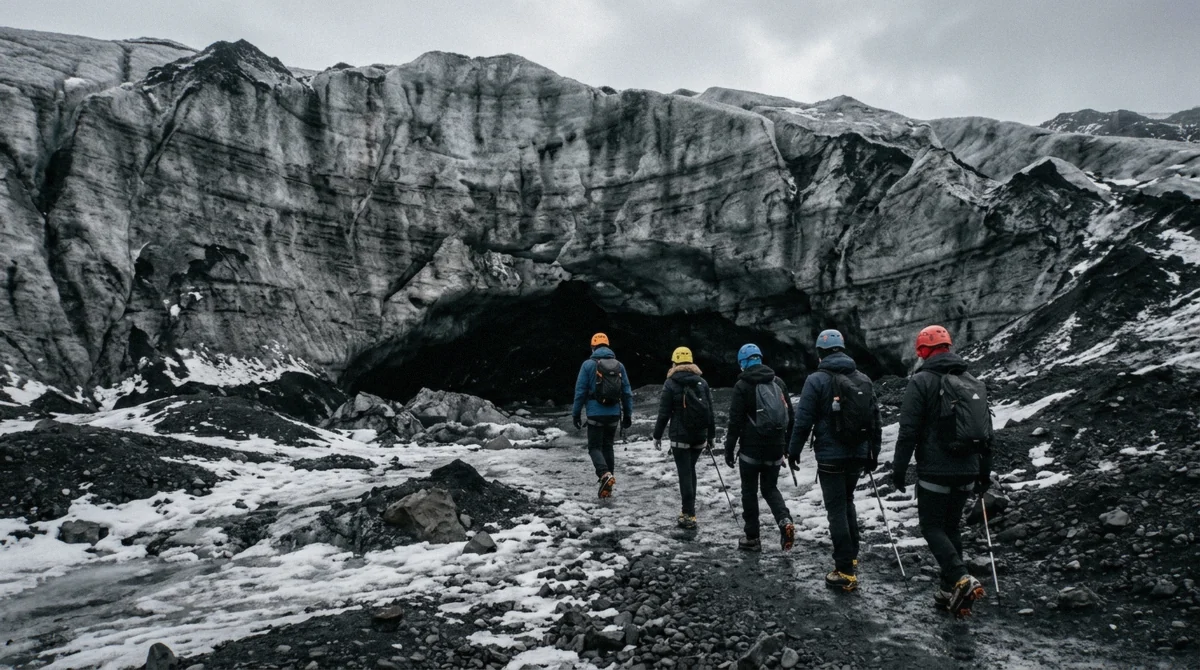
What Actually Decides Whether Your Date Runs
Cold is not what builds the caves
Most people assume the caves are a product of hard frost. They are not. They are drainage channels cut by summer meltwater, and what makes them enterable is the water stopping, not the air getting cold. The homepage covers the Vatnajökull ice cave season cycle in full.
The practical consequence is the part worth carrying: a mild, wet January is worse for your booking than a bitter dry one. Rain during a thaw sends water back through the channels, floods the chamber and can end a cave for the season with no warning. Deep cold does nothing but help.
Wind cancels more tours than snow
In eleven seasons I have lost far more departures to wind than to anything falling out of the sky. Above roughly 20 metres per second the glacier track becomes the problem rather than the cave: driving loose vehicles across an exposed outwash plain in a gale is where the risk sits.
Snow rarely cancels anything. What it does is mute the colour, because fresh cover on the roof cuts the light reaching the ice and the walls read grey-white instead of blue. A clear day after a windy week, with the snow blown off, is when the ice looks like the photographs.
Every cave is re-checked the morning of your tour
Since the rules tightened in Vatnajökull National Park, each operator appoints an experienced lead guide who takes part in a daily assessment of the cave and the overhanging ice above it, and the location is dropped for the day if the reading is wrong.
That is why a tour can be cancelled on a calm bright morning that looks perfect from the car park. The check is on the ice, not the sky. What happens when your tour is cancelled covers the refund side.
Best Time of Day
Take the first departure of the day whenever the schedule offers you a choice. Two reasons, both practical. Groups stack up in the popular features from late morning onward, and being first means the chamber is empty for your photographs rather than full of other people's helmets. Wind also tends to build through the day on this coast, so an early slot is marginally less likely to be shortened.
In December the choice mostly disappears. With four hours of light, tours cluster between about eleven and two, and there is one realistic slot. From February the day stretches far enough that a second and sometimes third departure appear, which is also your safety net: a morning cancelled for wind can occasionally be rebooked onto the afternoon rather than lost.
Questions About Timing a Cave Trip
What is the best month to see the ice caves in Iceland?
February, on balance. January produces marginally more stable ice, but February matches it closely while giving you 8.4 hours of daylight against 5, plus a second departure slot most days. If you can only travel in December the caves are open, but four hours of light makes for a compressed and dark day at both ends.
Can you see ice caves in Iceland in summer?
Not on Vatnajökull. From April to October meltwater runs through the channels that form the caves, the roofs are unstable and no operator sells entry. The one natural cave in Iceland that stays open through summer is under a different glacier entirely, near Vík. On Vatnajökull the summer offer is glacier hiking from $97, on the same ice.
How many hours of daylight are there in Iceland in winter?
In the southeast, roughly 4.2 hours around the December solstice, 5 in January, 8.4 in February and 11.7 by March. That is what shapes the tour timetable: December departures cluster around midday, and it is February before a second slot opens up. Sunrise and sunset shift by several minutes a day either side of the solstice, so early January feels noticeably lighter than late December.
When do the ice caves close for the season?
Usually at the end of March, but no operator publishes a fixed date because there is not one. The season ends when spring melt reopens the drainage channels and roofs start thinning, which a warm wet spell can bring forward into January. Guides make the call cave by cave, and a feature that closes may be replaced by another for a few weeks if one is still sound.
Which month has the fewest crowds at the ice caves?
November, followed by early March. November has newly scouted caves, easy slot availability and a quiet coast, at the cost of only 6.2 hours of daylight and chambers that are sometimes smaller. The busiest weeks by a distance are the Christmas fortnight and February half-term, both of which sell out weeks in advance.
Is it worth visiting the ice caves in December?
Yes, if you accept the light. The ice is stable, every operator runs, and December has the atmosphere the photographs are sold on. What it does not have is time: with 4.2 hours of daylight, your tour occupies most of the usable day and the drive at either end happens in the dark. Anyone with a flexible calendar should take February instead.