What Happens If Your Ice Cave Tour Is Cancelled
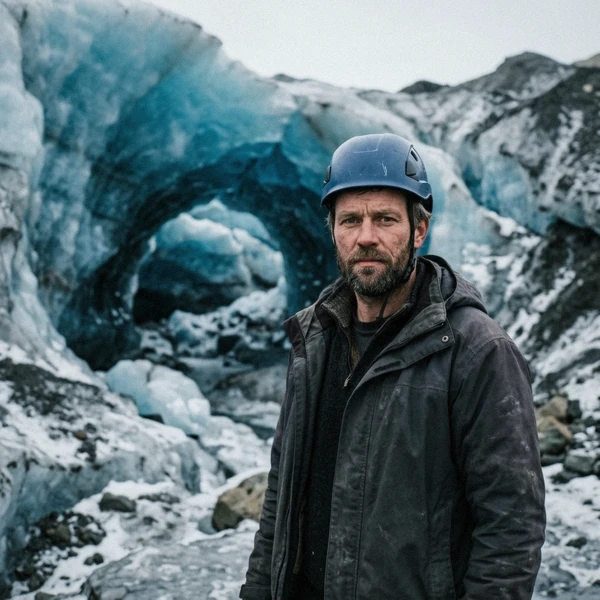
An ice cave tour cancelled for weather in Iceland means a full refund or a free rebook, and you choose which. Nothing is charged when you book in the first place, so a cancelled tour costs you nothing beyond the gap it leaves in your day. What stops tours here is wind on the glacier track and thaw undermining a cave roof, and almost never snow. I have made this call plenty of times from a car park that looked perfectly calm, and this page explains why that happens, who decides, and how to plan so it never costs you the trip.
Quick answer
A weather cancellation on Vatnajökull means a full refund or a free reschedule, your choice, and no payment is taken at booking on any tour here. The decision is made by the operator's guide on the morning, based on a daily assessment of the cave and the glacier track rather than on the forecast. Wind is the usual cause, thaw is the second, and snow rarely stops anything.
Key takeaways
- Cancelled by the operator means a full refund or a free rebook, and you pick which one
- The guide makes the call on the morning, which is why one operator can run while another does not
- You usually find out one to three hours before departure, by phone or email
- The trap clause: cancelling yourself inside 24 hours is not the same as being cancelled, and is not refundable
- A tour cut short after it has started is a partial refund at most, not a full one
- The one move that costs nothing: book the cave for your first free morning in the southeast, never your last
Why Tours Here Actually Get Cancelled
Wind, not snow
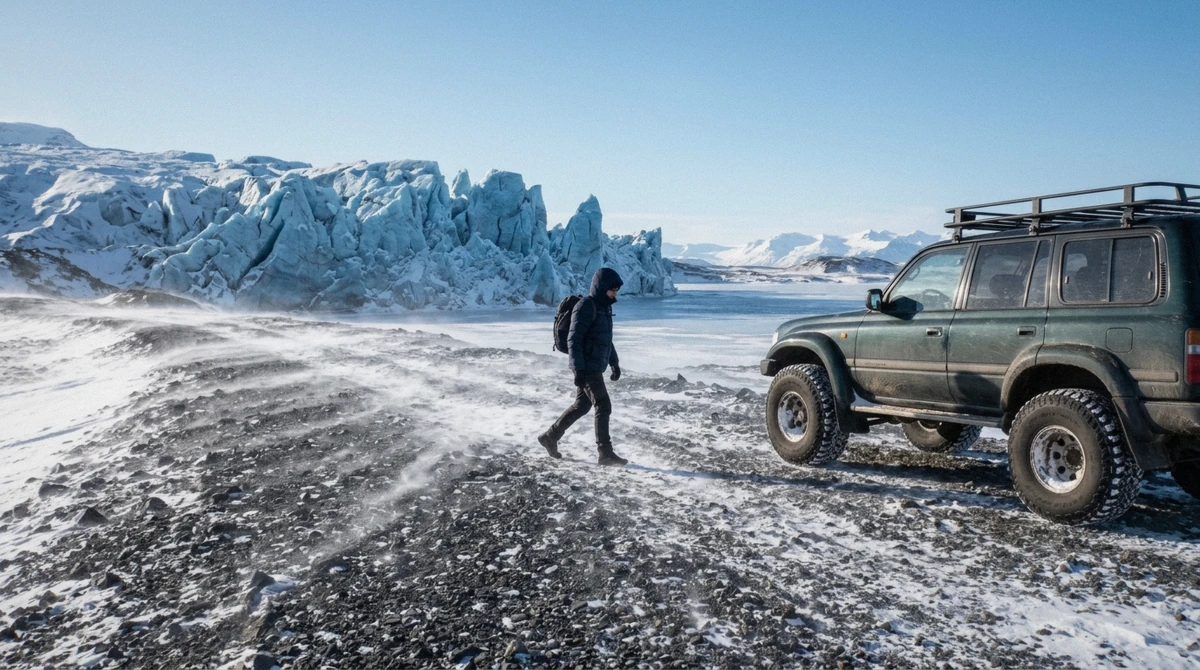
The variable that ends most departures is wind, and it usually ends them on the drive rather than at the cave. Getting to a feature means crossing an exposed outwash plain in a modified 4x4, and above roughly 20 metres per second of sustained wind that becomes the risk rather than the ice.
Iceland's south coast catches Atlantic systems first, and the gap between a calm morning and an unmanageable one can be two hours. This is also why a car park at the lagoon can feel benign while the glacier front two kilometres away is not.
Snow, meanwhile, rarely cancels anything. It mutes the colour of the ice by cutting the light reaching the walls, and it makes for a slower drive. It is not a safety trigger on its own.
Thaw and rain, the season-ending kind
The second cause is warm wet weather in the middle of winter. Rain during a thaw sends water back through the drainage channels that formed the cave, and a roof that was sound in December can be undermined in a matter of hours.
This is the cancellation that does not get rescheduled to tomorrow, because the feature itself may be finished for the season. Guides then move groups to another cave if one is sound, or refund outright.
The Vatnajökull ice cave season is on the homepage, and it is the reason the whole season sits between November and March.
The daily assessment
Since November 2024, every operator running cave tours in Vatnajökull National Park appoints an experienced lead guide who takes part in a daily assessment of each cave and the overhanging ice around it. If the reading is wrong, the location is dropped for that day.
So there is a third cancellation cause that has nothing to do with the weather you can see: the ice above an entrance moved overnight. On a bright still morning that is a hard message to deliver and an easy one to trust.
What stops a tour, and what does not
Sorted by how often each one is actually the reason.
| Condition | Cancels the tour? | Why |
|---|---|---|
| Sustained strong wind on the glacier track | Usually | The exposed drive is the risk, not the cave; loose vehicles on an outwash plain in a gale |
| Rain during a mid-winter thaw | Usually, and sometimes for the season | Water moves back through the channels and undermines the roof within hours |
| A failed morning assessment of the cave | Yes, that location for that day | The ice above the entrance shifted overnight, whatever the sky is doing |
| Heavy snowfall | Rarely | Slows the drive and mutes the blue, but is not a safety trigger on its own |
| Light rain or drizzle | No | The tour runs, and a grey wet morning still counts as a tour that ran |
| Fog and low cloud | No | You lose the mountain views and keep the cave |
| Road closure on Route 1 | Not the tour, but your day | Check road.is at breakfast, since the operator cannot refund a road you could not drive |
Who Makes the Call, and When You Find Out
The guide, on the morning
There is no aviation-style authority grounding everyone at once here. Each operator's lead guide assesses their own cave, their own track and the forecast, and decides. That is a deliberate design: the person who has been inside that feature this week is the person best placed to judge it.
You normally hear one to three hours before departure, by phone or email to the contact details on the booking. Occasionally the call comes at the meeting point, when conditions turned during the drive out.
Check your phone before leaving your guesthouse, and give a number that works on an Icelandic network rather than one you have switched off for roaming.
Why another company is still running
This is the question guides get asked most, usually in an annoyed voice, and it has an honest answer. Operators use different caves. A feature on one part of Breiðamerkurjökull can be sound while another two kilometres away is not, and the tracks to reach them cross different ground.
The second reason is departure time. A tour leaving at nine may run comfortably while the eleven o'clock is cancelled, because the wind arrived in between.
What it is not, in my experience on this glacier, is one operator being braver. The oversight council these companies fund together exists precisely so that the standard is shared.
Refunds and Rebooking
The standard, plainly
When the operator cancels, you are offered a free reschedule or a full refund and you choose. Nothing was charged at booking on any tour on this site, so in most cases there is no money to return at all, just a booking that closes.
Refunds where a payment has been taken land back on the original card. Direct with an operator that is usually a day or two; through a booking platform, allow five to ten working days for it to clear.
The tours worth knowing here for this reason are both cave tours from the Jökulsárlón car park and the Skaftafell cave and glacier hike, all of which cancel free up to 24 hours ahead and take no payment today.
The three clauses that surprise people
None of these is hidden, and all three catch someone every season.
- Cancelling yourself inside the 24-hour window is not the same as being cancelled: that is a no-show and it is not refundable
- Bad weather that does not stop the tour is not grounds for a refund, and a grey, windy, low-visibility morning still counts as a tour that ran
- A tour turned back partway earns a partial refund at most, and often a goodwill gesture rather than a formal one
Every Scenario, and What to Do
This covers essentially everything that happens in practice on this glacier.
| Scenario | What happens | Your move |
|---|---|---|
| Cancelled the evening before | Refund or rebook offered straight away, usually by email | Rebook the earliest slot you can, ideally the next morning |
| Cancelled one to three hours before departure | Phone call or email; you have not left the guesthouse yet | Check your phone before you drive, and ask for the choice explicitly |
| Cancelled at the meeting point | The guide explains on site, same refund or rebook applies | Ask whether an afternoon slot exists that day before taking the refund |
| Cave closed for the season by a thaw | No rebook on that feature; refund, or a move to another cave if one is sound | Take the alternative cave if offered, since the operator has already assessed it |
| Tour shortened after it started | You walked, you saw less, partial refund at most | Ask, politely and once; the answer depends on how far you got |
| You cancel more than 24 hours ahead | Free, no questions, nothing charged | Do it as soon as you know, so the slot goes back into the pool |
| You cancel inside 24 hours or do not show | Treated as a no-show, no refund | Call the operator anyway, since genuine emergencies are handled case by case |
How Often It Actually Happens
Nobody publishes a cancellation rate for this coast, and any specific percentage you read is somebody's guess. What I can tell you from eleven seasons is the shape of it.
Cancellations cluster. A calm fortnight will run every departure, and then a week of Atlantic lows takes out a run of mornings across every operator. December and January produce more of them than February and March, both because of the weather and because there is one usable departure slot instead of two or three.
The practical read: on any single booked morning in mid-winter, the odds are strongly that your tour runs. Over a five-day trip, the odds that at least one activity gets moved are meaningful. That is an argument for slack in the itinerary rather than for pessimism.
Planning So a Cancellation Costs Nothing
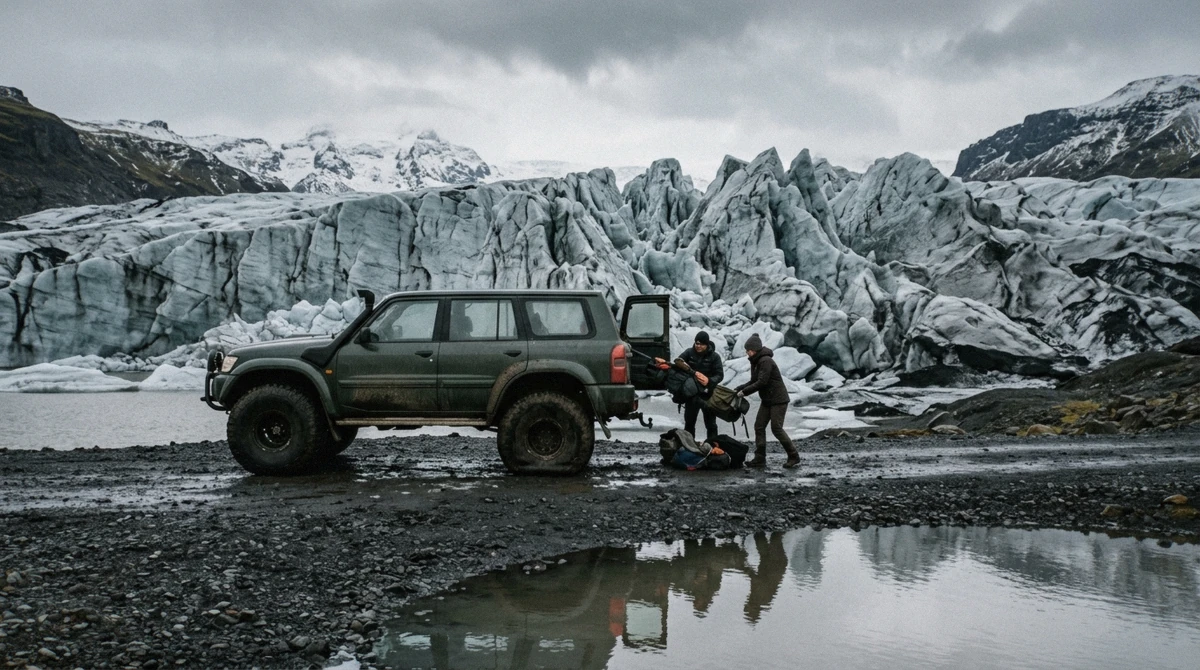
Five habits turn a cancelled morning from a ruined day into a rearranged one.
- Book the cave for your first free morning in the southeast, never the last: a cancellation on your final day is a refund and no cave
- Sleep in the southeast the night before, in Höfn or Kirkjubæjarklaustur, so a rebook to the same afternoon is possible
- Give a phone number that works on an Icelandic network and keep it on
- Leave the afternoon after the tour loose, since a morning cancellation often reappears as a two o'clock slot
- Check road.is at breakfast, because a closed road cancels your trip even when the tour is running
- Keep the free cancellation window in mind for your own plans too, not just theirs
The cheapest insurance is the calendar
February and March give you eight to eleven hours of daylight and two or three departure slots a day, which means a cancelled morning has somewhere to go. December gives you four hours and one slot, so a cancellation is simply a lost day.
If your dates are still flexible, that alone is a reason to travel later in the season. The month-by-month breakdown goes into what each one trades away.
What to Do Instead If Today Is a Wash
A cancelled cave does not mean a cancelled day, and most of the alternatives sit within half an hour of the same car park.
- The lagoon and Diamond Beach: at their most dramatic in exactly the weather that cancels tours, and they cost parking money
- Fjallsárlón, ten kilometres west and quieter, with the glacier front closer to the viewpoint
- The marked trail to the front of Skaftafellsjökull, about 3.7 km there and back on flat ground
- A glacier hike, which runs in conditions that close a cave and costs from $97
- Höfn, forty minutes east, for the langoustine the town is known for and an afternoon indoors
There is more detail on all of these in what you can see without a tour, which is worth reading before you book anything rather than after.
Does Travel Insurance Cover It?
Rarely, and rarely usefully. Standard travel policies cover cancellation of your trip, not the cancellation of one activity inside it, and because these tours refund in full there is no loss for a policy to cover in the first place.
Where insurance genuinely matters here is the drive. Winter road closures, a rental car incident on ice and weather-delayed flights are all real risks on this coast and all are usual policy territory. Check that your policy covers driving in Iceland in winter, which some exclude, and that it does not exclude guided glacier activity, which a few do.
Read the glacier exclusion carefully if you are taking a hike as well. Some policies treat guided glacier walking as an ordinary excursion and some file it with mountaineering.
Cancellation Questions
Do you get a refund if an ice cave tour is cancelled?
Yes. If the operator cancels for weather or ice conditions, you are offered a full refund or a free reschedule and you choose which. Since no tour on this site takes payment at booking, in most cases there is nothing to refund and the booking simply closes. Where money has changed hands, allow a day or two direct with an operator and five to ten working days through a booking platform.
Why was my ice cave tour cancelled when the weather looked fine?
Because the assessment is made on the ice, not on the sky. Every cave and the overhanging ice around it is checked daily by an experienced lead guide, and a chamber that shifted overnight fails that check on a bright still morning. The other common reason is wind two kilometres away on the exposed glacier track, which is invisible from a calm car park.
Does rain cancel ice cave tours in Iceland?
Not on its own, and light rain rarely stops anything. What matters is rain during a mid-winter thaw, which sends water back through the channels that formed the cave and can undermine the roof within hours. That kind of cancellation sometimes ends the feature for the season rather than for the day, and the operator will move you to another cave or refund.
Can you rebook an ice cave tour for the next day?
Usually yes, subject to space, and it is worth asking before you accept a refund. Rebooking works best if you are sleeping in the southeast rather than driving back to Reykjavík, and best of all from February onward, when two or three departure slots a day give a cancelled morning somewhere to go. In December, with one slot, the next day may be the only option.
What happens if the tour turns back partway?
You are on the ice, the wind gets worse on the upper glacier and the guide turns the group around. You see less than you hoped and the tour counts as having run, so a partial refund is the most you should expect and often it is a goodwill gesture rather than a policy. It is worth asking once, politely, and the answer depends largely on how far the group got.
How likely is a cancellation in winter?
On any single booked morning, most tours run. Across a whole trip, the odds that one activity gets moved are meaningful, because cancellations cluster into stretches of Atlantic weather rather than falling evenly. December and January produce more of them than February and March. Plan slack rather than plan for disappointment.