What to Wear on an Ice Cave Tour in Iceland
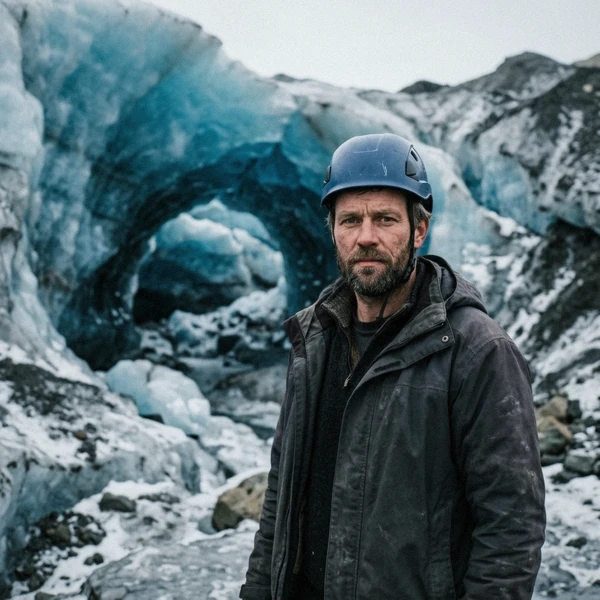
What to wear on an ice cave tour in Iceland comes down to three layers and waterproof boots above the ankle. A base layer that moves moisture, a fleece or light down over it, a waterproof shell and waterproof trousers on top, plus gloves and a hat. The boots are the only item that will get you turned away at the meeting point, because crampons need a stiff sole and an ankle to clamp onto and will not hold on trainers. Inside the cave itself the air sits close to freezing, which is milder than the walk in. I have fitted crampons on a lot of people who dressed for the chamber instead of the approach, and it is always the wrong way round.
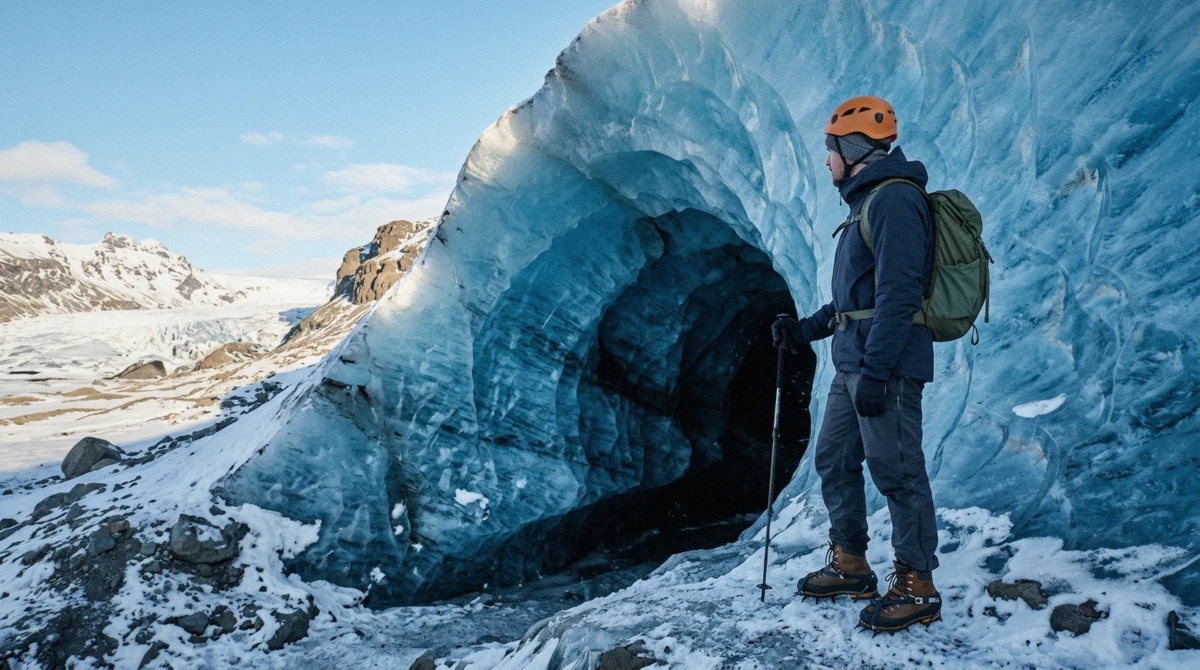
Quick answer
Wear a moisture-wicking base layer, a fleece or light down mid layer, and a waterproof shell jacket and trousers, with waterproof hiking boots above the ankle. The tours supply the helmet, crampons and headlamp; the boots and the warmth are yours. Inside a cave the air holds around 0°C, but the wind on the walk in is what you are actually dressing for.
Key takeaways
- Boots above the ankle, waterproof, stiff enough for crampons: the one item that gets people turned away, rentable at both base camps
- Three layers, none of them cotton, with a waterproof shell on the outside for wind rather than for rain
- Included on every tour on this glacier: helmet, crampons, and a headlamp where the chamber needs one
- Inside the cave the air sits near 0°C, milder than the exposed walk to reach it
- Jeans are the single most common mistake, and wet denim on a glacier stays wet for the whole tour
- Summer hikes still need the shell: July highs reach 13°C but the wind off the ice does not read that way
What to Wear
Base layer
Merino wool or a synthetic base, top and bottom, fitted rather than loose. Its job is to move sweat off your skin, because you will warm up on the walk in and then stand still for half an hour in a cave.
Cotton does the opposite. It holds moisture against you and cools you down the moment you stop moving, which is exactly the point in the tour when you want to be comfortable. This is the layer people skip and then regret.
What each operator hands out differs a little, and the Vatnajökull ice cave and hike tours list it per departure.
Mid layer
A fleece or a light down jacket. In January you may want both; in March one is usually enough. The mid layer is the one you take off if the walk in turns out to be longer than you expected, so it needs to be something you can carry.
A thin puffy that packs into its own pocket is the ideal shape here. A heavy ski jacket worn as a mid layer is not, because there is nowhere to put it once you are warm.
Outer shell
A waterproof shell jacket and waterproof trousers, both windproof. On this coast the shell earns its keep against wind far more often than against rain, and a gale on an exposed outwash plain will find any gap.
Waterproof trousers matter more than people expect. You will kneel on wet gravel to get a photograph, and the floor of a cave is meltwater-polished ice and rubble.
Footwear
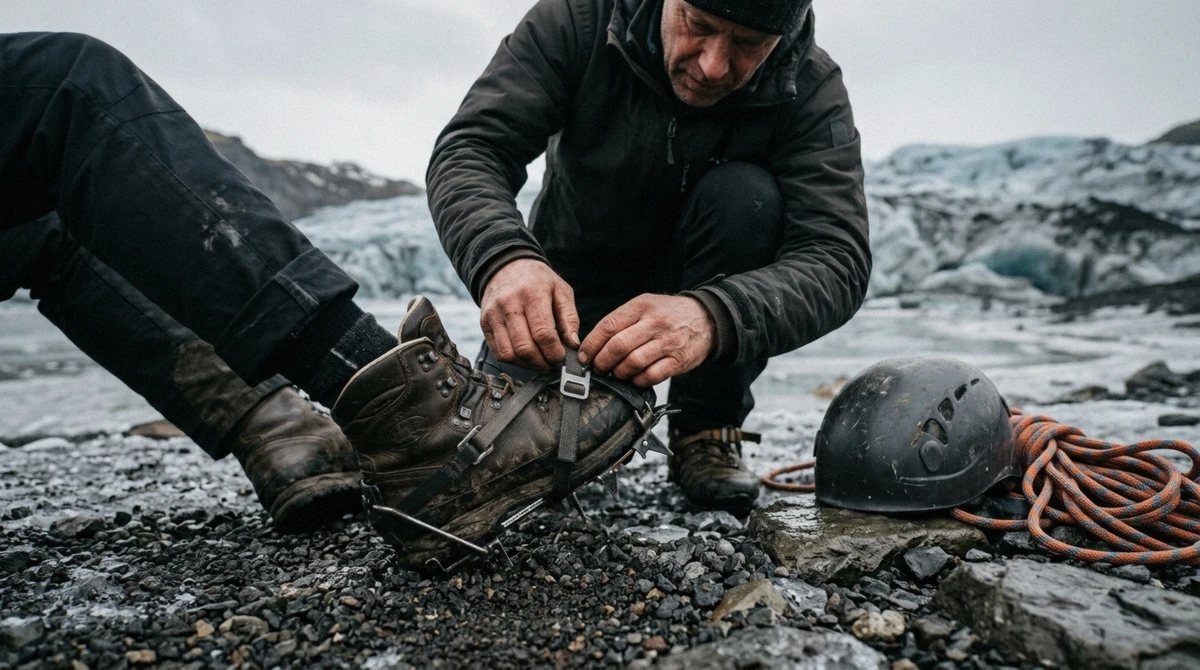
This is the one that decides whether your tour happens. Crampons clamp onto a stiff sole and grip an ankle; anything softer and they come off on the ice.
- Waterproof hiking boots above the ankle: the requirement, and rentable at both base camps if you did not pack them
- Stiff-soled walking boots: fine, as long as they cover the ankle and are genuinely waterproof
- Trainers or running shoes: not accepted, and the reason most people get turned away
- Wellingtons: waterproof but too soft, so crampons will not stay on
- Anything open-toed: no, and I have genuinely seen it attempted in March
Colours worth thinking about
This matters less for safety than for what you take home. Blue ice swallows dark clothing, and every photograph you appear in will be taken against it.
| Colour | Good? | Why |
|---|---|---|
| Red or orange | Best | Reads clean against blue ice and white snow, and your guide can pick you out in flat light |
| Yellow | Good | Same contrast benefit, and it stays visible in the low winter sun |
| Navy or dark blue | Poor | Merges into the cave walls and the shadowed ice in every frame |
| Black | Poor for photos | Warm and practical, but you become a silhouette against a dark gravel floor |
| White or pale grey | Avoid | Vanishes against snow, which is most of what is behind you from November to March |
| Cotton, any colour | Avoid | Holds sweat and meltwater, then chills you the moment the group stops |
| Synthetic or merino, any colour | Best | Keeps insulating when damp, which on a glacier it will be |
What to Bring
Everything below fits in a small daypack, and each one is on the list because of something I have watched go wrong.
- Warm gloves, plus a thin spare pair: you will take the thick ones off for the camera
- A hat that covers your ears: the helmet goes over it, so nothing bulky
- Sunglasses: glare off wet ice on a clear day is severe, in summer especially
- A small daypack: for the mid layer you will shed on the walk in
- Spare camera battery, kept in an inner pocket: cold flattens them fast
- A phone lanyard or zipped pocket: dropped phones on cave floors do not survive
- Snack and water: no tour on this page includes food
- A dry pair of socks left in the car: worth more than you would think on the drive back
- Cash or card for boot rental: arranged at the meeting point, not in advance
- Lip balm and hand cream: wind on this coast is drier than the temperature suggests
The battery problem, specifically
Cold does not damage a battery but it does hide its charge. A phone showing 60 per cent at the car park can die inside the cave at 0°C, usually at the moment you lift it to shoot. Keep the spare against your body, under the mid layer rather than in the pack.
The second half of that problem is condensation. Bringing a cold lens into a warm car fogs it instantly and can take twenty minutes to clear. Put the camera in the pack before you get in, and let it warm up shut.
What the Tours Provide, So You Do Not Overpack
Every tour on this glacier hands out technical gear at the meeting point and fits it on you. What follows is what is actually included, taken from the operators' own listings.
| Item | Usually provided | Bring your own | Notes |
|---|---|---|---|
| Helmet | Yes | No | Mandatory and fitted before you step on ice, on every tour here |
| Glacier crampons | Yes | No | Fitted at the ice edge rather than at the base camp |
| Headlamp | On cave tours | No | Listed explicitly on the Crystal ice cave super jeep tours |
| Harness | On hiking tours | No | Included on the Skaftafell cave and glacier hike and the crevasse walk |
| Ice axe | On hiking tours | No | A walking aid, not climbing equipment |
| Waterproof boots above the ankle | No | Yes | Rentable at both base camps for a small fee |
| Waterproof jacket and trousers | Rarely | Yes | Rain gear can be rented at Skaftafell if you arrive without |
| Base and mid layers | No | Yes | Nobody rents these, and nobody will lend you one |
| Gloves and hat | No | Yes | The most commonly forgotten items of the lot |
| Sunglasses | No | Yes | Not optional on a clear day above the snow line |
| Food and water | No | Yes | No tour on this page includes either |
| Transport to the meeting point | No | Yes | Rental car or transfer; there is no scheduled bus to either base camp |
What Not to Wear or Bring
This list comes from the operators' own restrictions and from the things guides confiscate, redirect or refuse at the meeting point.
- Jeans: the single most-cited mistake, wet denim on a glacier stays wet for the whole tour
- Cotton hoodies and cotton socks: same problem, one layer further in
- Trainers and wellingtons: crampons will not stay on either, and this is a refusal, not a warning
- Long loose scarves: they hang into crampon points when you crouch
- Umbrellas: useless in glacier wind and awkward in a chamber
- Drones at Jökulsárlón between 15 April and 15 July: restricted for bird protection, and filming for commercial use anywhere in the park needs a permit from the national park
- Anything you would mind losing on a gravel and ice floor, jewellery included
The drone rule, since people ask
Recreational drone flying is broadly allowed in Vatnajökull National Park under per-area conditions rather than a blanket ban, and the park publishes maps of where and when. The Jökulsárlón restriction from 15 April to 15 July exists to protect nesting birds.
That window does not overlap the cave season at all, so if you are here for a cave it is not your problem. If you are here in June for a glacier hike, it is.
Packing by Season
Winter, November to March
Daytime highs of 3 to 4°C and daylight from four to eleven hours, so you are dressing for wind and for standing still. Full three-layer system, thick gloves plus a thin spare, a hat under the helmet and something over your face for the drive across the outwash.
This is cave season, and the walk to a chamber is exposed. Add a neck gaiter, which is the cheapest comfort upgrade on the list.
Spring and autumn, April, May, September and October
Highs of 6 to 10°C, no caves, and the wettest months of the year in September and October. The mid layer gets thinner and the shell gets more important, because this is when rain arrives horizontally.
Waterproof trousers stop being optional here. A hike on a wet October morning with soaked legs is a long three hours.
Summer, June to August
Highs of 12 to 13°C and up to twenty-one hours of daylight, and people consistently under-dress. One guest in early July described light layers being enough, and on a calm sunny day they are. On a windy one at the same temperature they are not.
Bring the shell regardless, wear sunglasses, and keep the boots, because the ice does not care what month it is. For which month suits your trip, see the best time to visit the ice caves.
Dressing for the Early Departure
The first tour of the day is the one worth taking, and it is also the coldest. In December that means leaving a guesthouse in the dark at around 3°C, standing in a car park while gear is fitted, then warming up fast once the walking starts.
The formula is dress-for-then-peel. Put everything on for the car park, unzip the shell within ten minutes of moving, and take the mid layer off before you start sweating rather than after. Sweat that soaks a base layer at nine in the morning is still cold at eleven when you are standing in a chamber.
Carry the shed layer rather than tying it round your waist, where it catches on a harness. This is the entire reason the daypack is on the list.
Gear inclusions differ slightly between operators, and each listing spells its own out. They are set out side by side with the Vatnajökull cave tours we track.
Questions About Kit
How cold is it inside an ice cave in Iceland?
The air inside sits close to 0°C, because that is what ice holds it at. It usually feels milder than the walk in, where wind on an exposed glacier does the real work. Dress for the approach rather than the chamber: shell, layers, gloves and a hat. Standing still for twenty to forty minutes inside is when a damp base layer starts to matter.
Can you wear jeans on an ice cave tour?
You can, and you will regret it. Denim soaks up meltwater and snow, holds it against your legs and takes hours to dry, which turns a comfortable four-hour tour into an endurance exercise. It is the mistake guides mention most often. Waterproof trousers over a synthetic or merino base layer cost little and fix it completely.
Do you need special boots for an ice cave tour?
You need waterproof hiking boots that cover the ankle and have a sole stiff enough for crampons to clamp to. That rules out trainers, which are the usual reason someone is turned away, and wellingtons, which are waterproof but too soft to hold a crampon. Both base camps rent suitable boots for a small fee if you did not bring any.
What do the ice cave tours provide?
A certified glacier guide, a helmet and glacier crampons on every tour, plus a headlamp on the cave tours and a harness and ice axe on the hiking ones. What you supply is clothing and footwear: base layer, mid layer, waterproof shell and trousers, gloves, hat and boots above the ankle. Food, drink and transport to the meeting point are not included anywhere.
What should you wear on a glacier hike in summer?
The same system, one layer lighter. July highs reach 13°C in southeast Iceland, so a thin fleece usually replaces the down, but the waterproof shell, the trousers and the boots stay. Add sunglasses, which matter more in summer than in winter because of glare off wet ice under a high sun. Wind is what makes 13°C feel like less.
Can you take a camera or phone into the ice cave?
Yes, and most guides will take photographs of the group as well. Keep a spare battery in an inner pocket, because cold hides charge and phones die at the worst moment. Use a strap or a zipped pocket rather than carrying it loose over a floor of ice and rubble, and put the camera away before getting back into a warm car so the lens does not fog.