Are the Vatnajökull Ice Caves Worth It?
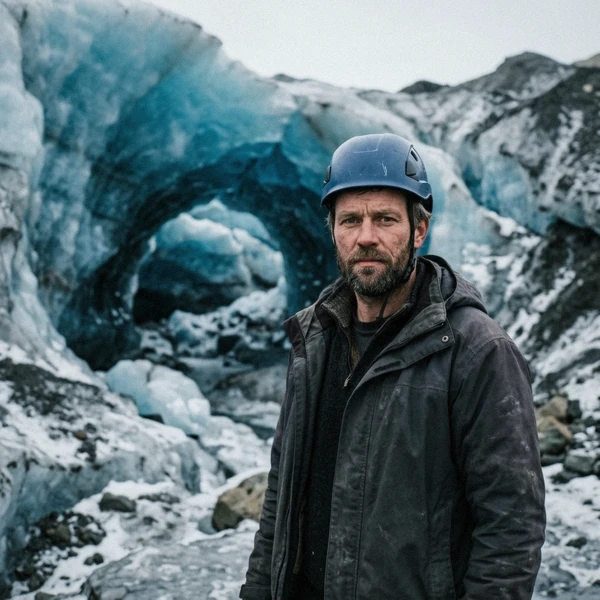
Are Iceland ice caves worth it? Yes, if you are here between November and March, you accept that the chamber itself takes twenty to forty minutes, and $161 for a half day sits inside your budget. No, if you are travelling in summer, if a three-hour round trip from a car park is the wrong shape for your day, or if you have already decided what the cave will look like from a photograph. I have been scouting and guiding these caves on Breiðamerkurjökull since 2014, and the people who come out disappointed are almost always the ones nobody warned. As of July 2026 the caves are closed and the glacier hikes are what is running.
Quick answer
A Vatnajökull ice cave tour is worth it between November and March if you go in expecting a twenty to forty minute stop inside compressed blue ice rather than an afternoon underground. Tours cost $161 to $170.51 for two and a half to four hours door to door, all glacier gear included. Outside that season no natural cave on this glacier is open at any price, and a glacier hike from $97 is the honest substitute.
Key takeaways
- Cost: $161 to $170.51 per person for a cave, $164.83 for the one tour that adds a real glacier hike to it
- Best reason to go: compressed centuries-old ice reads a blue that no photograph reproduces, and you can put a hand on it
- Biggest honest downside: you are inside for twenty to forty minutes of a three-hour tour, and nobody can promise you the chamber in the listing photo
- Skip it if: you are travelling April to October, when the caves are shut and only hikes run
- Best months: January and February for the most stable ice, February for daylight as well
- Every tour cancels free up to 24 hours ahead and takes no payment at booking, which matters on a glacier where wind closes departures
The Short Answer
Worth it, with conditions attached
For a winter trip through southeast Iceland, a cave tour is one of the few paid activities I would call hard to replicate. There is no other way to stand inside a glacier, and the ice in there is genuinely older than the country's written history. What it is not is a long experience or a guaranteed one.
The money is not the deciding factor either. At $161 a cave costs less than a whale watching trip out of Reykjavík and roughly the same as dinner for two in Höfn. What decides it is whether the shape of the day suits you: drive to a car park, ride a modified vehicle onto moraine, walk, look, walk back.
Both answers below are worth reading before you book, because the second list is the one operators do not print.
Current departures and Vatnajökull ice cave tour prices sit on the homepage if you want the numbers first.
Worth it if
These three cover most people who come out of the ice pleased with what they paid for.
- You are in the southeast between November and March with one free morning and no fixed plan for it
- You want to see something that does not exist anywhere else in Europe at that scale, and are content that it lasts under an hour
- You are travelling with someone aged six or over who can walk on rubble in crampons, since the super jeep tours take children younger than the walking ones
Skip it if
These three are the ones I would tell a friend outright, and each of them ends a booking.
- You are visiting between April and October, when meltwater has reopened the drains and no natural cave on Vatnajökull is enterable
- Your budget for the day is under $150, in which case a glacier hike at $97 puts you on the same ice for a third less
- You need certainty, because wind and mid-winter thaw cancel departures at short notice and no operator will name your cave in advance
What It Actually Costs
Every option on this glacier, priced
Prices below are what these tours charged when we last checked them in July 2026, per person, with all glacier safety gear included.
| Option | Typical price | Duration | Best for |
|---|---|---|---|
| Cave tour on foot from the lagoon | from $161 | 2.5 to 4 hours | The longest stretch on the ice for the money. Both tours that leave the Jökulsárlón car park |
| Cave tour by super jeep | from $170.51 | 2.5 to 3 hours | Short afternoons and children from age six. The two Crystal ice cave super jeep tours |
| Cave and glacier hike in one | from $164.83 | 4 hours | Getting a proper hike as well as a chamber. The Skaftafell blue ice cave and hike |
| Glacier hike, no cave | from $97 | 3 to 4.5 hours | April to October, when nothing else is open. The three Skaftafell hikes compared |
| On your own | 1,040 ISK parking | As long as you like | Seeing the lagoon and the icebergs without entering any ice |
Most people spend between $161 and $171 per person on the cave itself. The spread across those tours is under ten dollars, so the real cost driver is not which operator you pick but whether you were going to be in the southeast anyway: Jökulsárlón sits about five hours from Reykjavík, and a rental car and a night in Höfn will outweigh the ticket. Parking at the lagoon and at Skaftafell runs 1,040 ISK a day each, about $8.30 at 125 krónur to the dollar in July 2026, with a 50 per cent discount at the second if you paid at the first the same day.
Independent visitors can still get a great deal out of this stretch of coast without buying anything: the lagoon, the icebergs and Diamond Beach cost nothing but the parking, and what you can and cannot do without a guide is worth reading before you decide the tour is compulsory.
What You Get for the Money
The three hours, in order
We meet you at a car park rather than an office. At Jökulsárlón that is the main lot beside the cafeteria, with the icebergs behind you and a large 4x4 waiting; at Skaftafell it is a base camp with a 4x4 bus. Gear comes out first: helmet, crampons, a headlamp for the darker chambers, and a harness and ice axe if the tour includes a hike.
The drive off the tarmac is longer than people expect and better than they expect. Tyres get let down, the track crosses outwash plain and moraine, and reindeer turn up along that stretch often enough that we stop for them. Then the walk, anywhere from one kilometre to five and a half depending on where that winter's feature sits.
The cave itself is the short part. Twenty to forty minutes, which is what fits into three hours once the drive and the walk have taken their share, and which is longer than it sounds when there is nothing to do in there except look.
What the ice is actually like
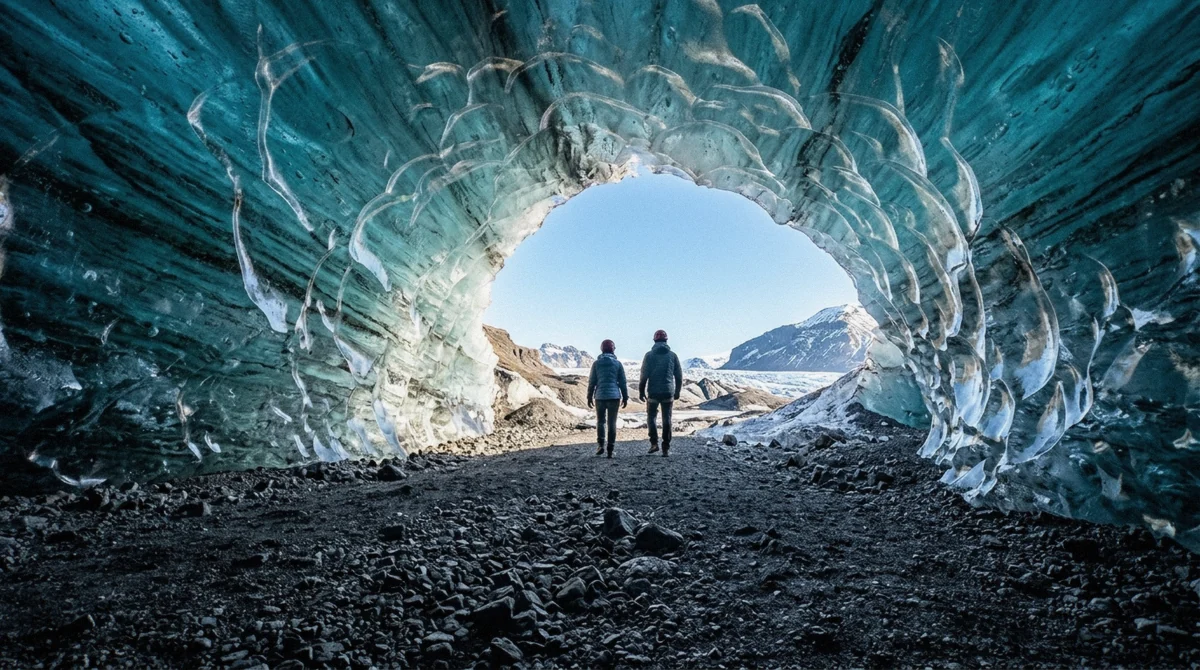
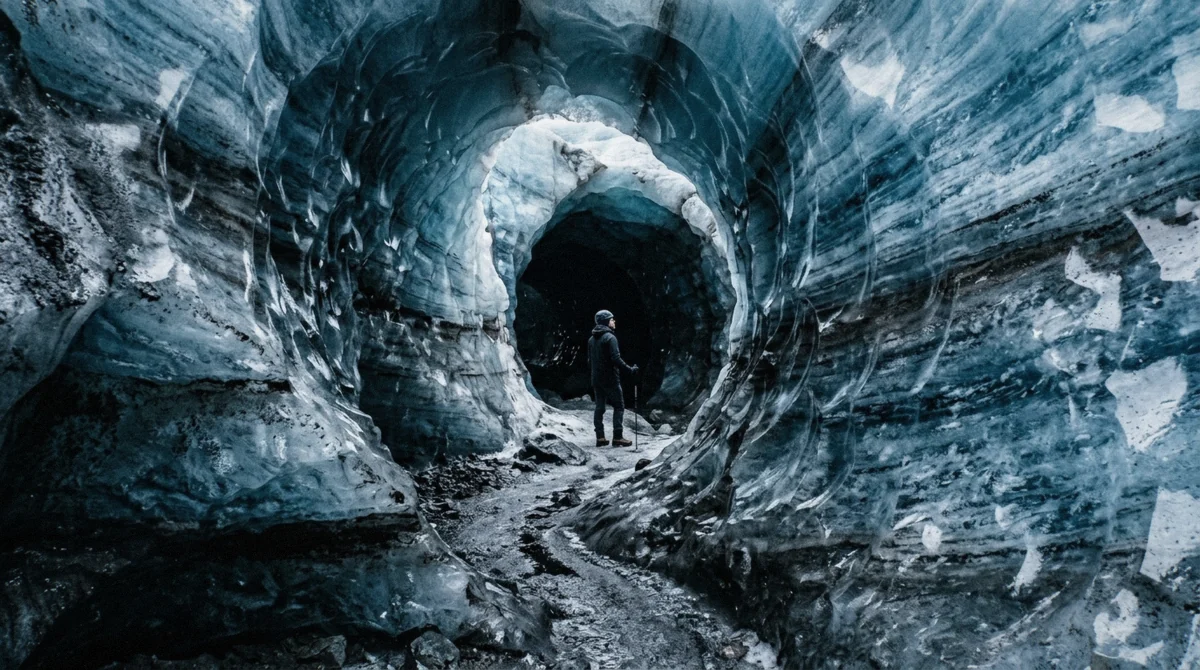
Compressed glacier ice has had the air squeezed out of it over centuries, so light travels deep instead of scattering, loses its red on the way, and comes back blue. In a wide chamber on a clear day that reads closer to swimming pool water than to sky. In a low tunnel under fresh snow it can read grey-green, and most listing photographs have been pushed a stop or two.
The things I point out on every trip are the parts people miss: black ash bands folded through the walls from eruptions under the ice cap, meltwater polish that makes a section nearly transparent, and the fact that the surface ice here fell as snow around the time the sagas were being written.
- Included in every price on this page: certified guide, helmet, crampons, headlamp where needed, and the vehicle transfer onto the ice
- Included on the hiking tours: a harness and an ice axe as well
- Not included anywhere: waterproof boots above the ankle, which you bring or rent at the meeting point
- Not included: food, drink, photographs, and the drive to the southeast
The Honest Downsides
You are inside for less time than you think
Twenty to forty minutes in the chamber, out of two and a half to four hours. This is the single most common reason people feel short-changed, and it is structural rather than an operator cutting corners: the drive and the walk are most of the tour. If you are picturing an afternoon exploring passages, adjust that now.
Nobody can sell you the cave in the photograph
Listings describe a cave, a tunnel or a canyon because the feature changes shape and size every season, and sometimes mid-season. The chamber that produced the famous photographs may have collapsed two winters ago. You are booking a guide, a glacier and a date.
The weather cancels tours, often
Wind closes the glacier track before it closes the cave, and a warm wet spell in January can flood a chamber and end it for the season. Book the cave on your first free day in the southeast rather than your last, and treat the free cancellation window as the insurance it is.
December light is genuinely short
Around four hours of daylight at the solstice, which squeezes departures into the middle of the day and means an early start and a dark drive at both ends. February buys back eight hours of light for the same ticket price.
It is not a wilderness experience
On a February weekend there can be two groups inside the same feature and a line of vehicles on the track. The caves are the most photographed thing in southeast Iceland and the numbers reflect that. Weekday mornings early and late in the season are noticeably quieter.
Worth It If You Are Already Going to Jökulsárlón?
What the same money buys that day
The real question at the lagoon is not whether a cave is impressive. It is what else that morning and that $161 could go to, since everything below is within half an hour of the same car park.
| Instead of the cave | Price | Time it takes | What you come away with |
|---|---|---|---|
| Ice cave tour | from $161 | 2.5 to 4 hours | Twenty to forty minutes inside compressed blue ice, November to March only |
| Cave and glacier hike together | from $164.83 | 4 hours | A chamber plus three hours walking crevasses on Falljökull |
| Glacier hike, no cave | from $97 | 3 to 4.5 hours | The same ice underfoot, every month of the year, sixty dollars cheaper |
| The lagoon and Diamond Beach alone | 1,040 ISK parking | As long as you like | Icebergs from the shore and the black beach, without entering any ice |
When to skip it even so
If your day at the lagoon is already full, skip the cave. The boat trips, Diamond Beach and the drive itself fill a day comfortably, and squeezing a three-hour tour into an afternoon that also has to reach Höfn before dark makes the whole thing rushed.
Skip it too if you are here in a week of forecast storms. A cancelled cave on a packed itinerary leaves you with a refund and a hole, and the lagoon does not need the cave to justify the drive.
When to add it anyway
The cave is a complement to the lagoon rather than a preview of it, and the two are half an hour apart. If you have a spare morning at that end of the country, this is the one activity here that does not exist elsewhere in Europe at this scale.
The practical case is simple: you have already paid the real cost, which is the drive. Adding $161 to a trip that already involved five hours of Ring Road buys you the inside of the glacier that made everything you came to photograph. Doing the drive and not going in is the version people regret.
When It Is Worth It Most
January and February, for different reasons
January gives the most stable ice. The cold has had two months to set the roofs and the meltwater has been gone since autumn, which is when chambers hold their best shape. The cost is light: around five hours of it, all of it in the middle of the day.
February is my own pick. The ice is still locked in, daylight is back to eight hours and change, and the second departure slot of the day reopens. March adds light again and adds risk, because a warm spell late in the season can take the best chamber out.
November caves are new, freshly scouted and sometimes smaller, since the roofs have had less cold behind them. For the full month-by-month picture, including crowds and daylight, see the best time to visit the ice caves.
Which Answer Fits You
If you are in Iceland between April and October
skip the cave, it does not exist, and take a glacier hike from $97 instead
If you have children aged six or seven
book a super jeep cave tour, the only ones on this glacier that go below age eight
If your budget for the day is under $150
take a Skaftafell glacier hike at $97 to $103.44 and keep the difference
If you want the cave and a real walk on the ice
take the four-hour Skaftafell cave and glacier hike at $164.83
If you have one fixed morning and no flexibility
book anyway, but early in your trip, and read what happens when a tour is cancelled first
How to Book Without Overpaying
The booking window that matters
Cave dates go on sale in September or October, once guides have been inside that winter's features. Weekends across the season, the Christmas fortnight and February half-term sell out weeks ahead; midweek mornings in November and March stay open until a few days before.
Since none of these tours charges at booking and all of them cancel free up to 24 hours out, holding a slot early costs you nothing and protects you against the one thing you cannot control. That policy is worth more than the ten-dollar spread between operators.
What does not work is waiting for a discount. Cave prices here do not drop as the date approaches; the good slots simply disappear.
Three picks, by what you actually want
For the longest time on the ice, the three-hour tour on foot from the lagoon at $161, rated 4.6 from 1,129 reviews. For a family with younger children, a super jeep tour at $170.51, which takes children from six. For the best single day out, the four-hour Skaftafell cave and hike at $164.83.
All three are on what a Vatnajökull ice cave tour costs with live dates, and all three refund in full when the operator calls a departure off.
Questions People Ask Before Deciding
How long do you actually spend inside a Vatnajökull ice cave?
Twenty to forty minutes for most groups. The tour itself runs two and a half to four hours, and the drive off the tarmac plus the walk to the feature take the rest. Guides stage groups so you get a stretch of the chamber to yourselves for photographs, but nobody is spending an afternoon underground. If that ratio bothers you, the four-hour cave and glacier hike at $164.83 puts far more of the time on the ice.
Why do some visitors find the ice caves disappointing?
Three reasons, in the order I hear them. The chamber was smaller than the photograph that sold them on the idea, because caves change every season and the famous shots are from features that no longer exist. The colour read grey rather than blue, which happens under fresh snow or flat light. Or they had not registered how short the time inside would be. All three are avoidable by booking on the guide and the glacier rather than on an image.
How much does a Vatnajökull ice cave tour cost?
From $161 to $170.51 per person, depending on the operator and whether you walk or ride a super jeep to the ice. The four-hour tour that combines a cave with a glacier hike is $164.83. Every price includes a certified glacier guide, helmet, crampons and the transfer onto the ice; boots above the ankle are the one thing you bring or rent yourself.
How far in advance should you book an ice cave tour?
A few weeks for a weekend, the Christmas fortnight or February half-term, and a few days for a midweek morning in November or March. Dates for a season appear in September or October. Nothing is charged at booking and cancellation is free up to 24 hours ahead, so reserving early costs nothing and protects the slot.
Is an ice cave tour suitable for beginners?
Yes. None of these tours assumes any glacier experience, and learning to walk in crampons takes about ten minutes on flat ice. What they do assume is general fitness for a walk of up to five and a half kilometres on uneven ground, and boots that crampons can clamp onto. Minimum ages run from six on the super jeep tours to ten on the longer walking ones.
Is the ice cave better than a glacier hike?
They answer different questions. The cave gives you fifteen minutes of something you cannot see anywhere else and a shorter day; the hike gives you three to four hours on the ice for around sixty dollars less and runs every month of the year. If you can only do one and you are here in winter, take the cave. If you are here in summer, the hike is not a consolation prize, it is the whole offer.
Are the ice caves safe to visit?
With a certified guide and the daily assessments now required in Vatnajökull National Park, yes, and the record is good. There has been one fatal accident on this glacier in recent years, in August 2024, and it changed how operators work. The full picture, including who is ruled out on medical grounds, is in our guide to ice cave safety.